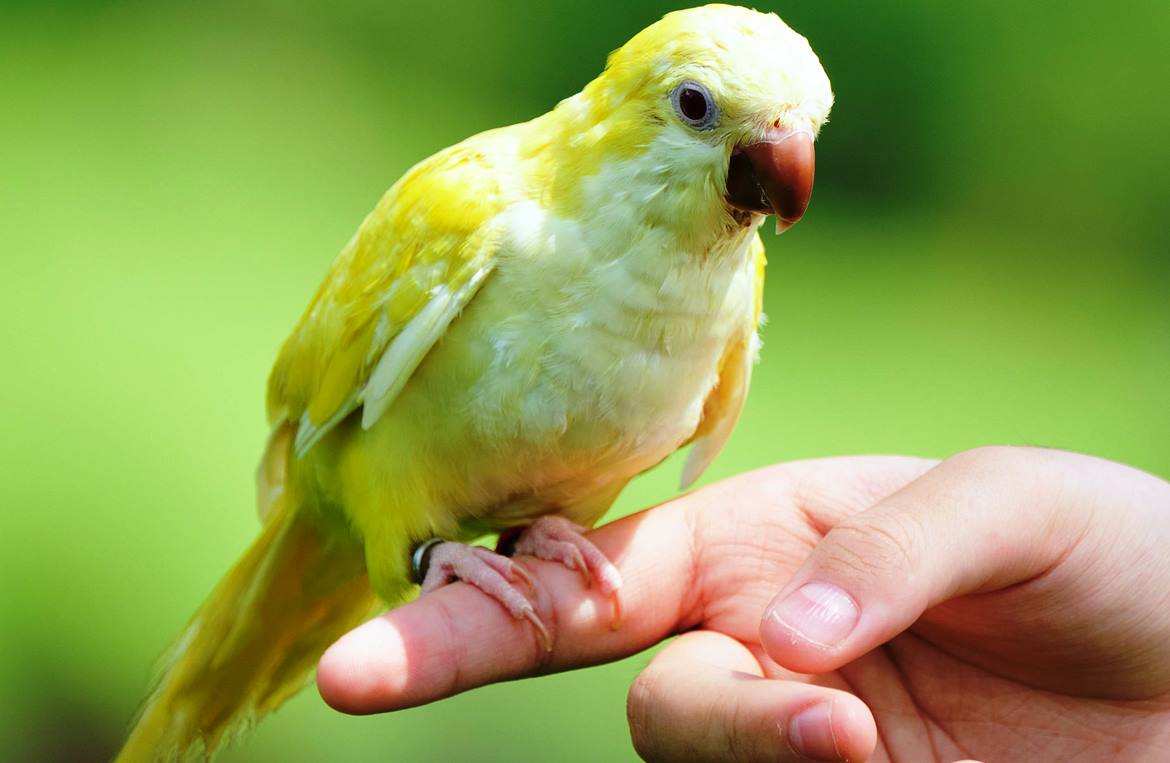
No one in the world can deny the beauty of parrots. These intelligent and interactive birds always capture the hearts of bird lovers. One such gem is the Yellow Quaker Parrot – a bird known for its bright feathers and nature.
Appearance
The Yellow Quaker Parrot is a visually striking bird.
Plumage: Vivid Yellow with touches of white on the face
Eyes: Red or Pink
Beak: Orange
Highly Intelligent
The Yellow Quaker Parrot is known for its sharp intellect and quick learning. They are great observers and expressive. Their emotional intelligence allows them to tune into your mood. They may show their love by preening your hair.
Social and Affectionate
These birds love to be a part of your daily life, and sitting on your shoulder is one of their classic quirks. They follow you around the house, and are ideal for people looking for a bird with real companionship potential. Yellow Quakers love to play and participate in activities. Like other curious birds, hey thrive on mental stimulation.
Diet
As usual, the diet of Yellow Quaker Parrot consists of fruits, grains, and lentils. Provide them a balanced and varied diet to live healthy life. They also love seeds and nuts. Moreover, quality pellets also ensure balanced and complete nutrition.
Health and Lifespan
Yellow Quaker Parrots are generally healthy birds and can live 20–30 years with proper care.
Common health issues: Feather plucking, fatty liver disease, respiratory infections.
Vet checkups: Annual visits to an avian vet help catch and prevent problems early.
Caring
Yellow Quaker Parrot is a commitment that should not be taken lightly. They need a spacious cage and place to fly and thrive. Provide a variety of toys, perches, and swings. Rotate toys frequently to prevent boredom.
Is a Yellow Quaker Parrot Right for You?
They need daily interaction and mental stimulation.
While not excessively loud, their chatter may not be suitable for noise-sensitive households.
Some states in the U.S. (like California and Georgia) have restrictions on Quaker ownership due to their potential to form wild colonies.
Tips for New Owners
- Start socializing early
- Invest in toys
- Create a routine as birds thrive on consistency
- Educate yourself continuously
These lovely creatures captivate our imagination with their beauty and receive love and appreciation for their lively character.