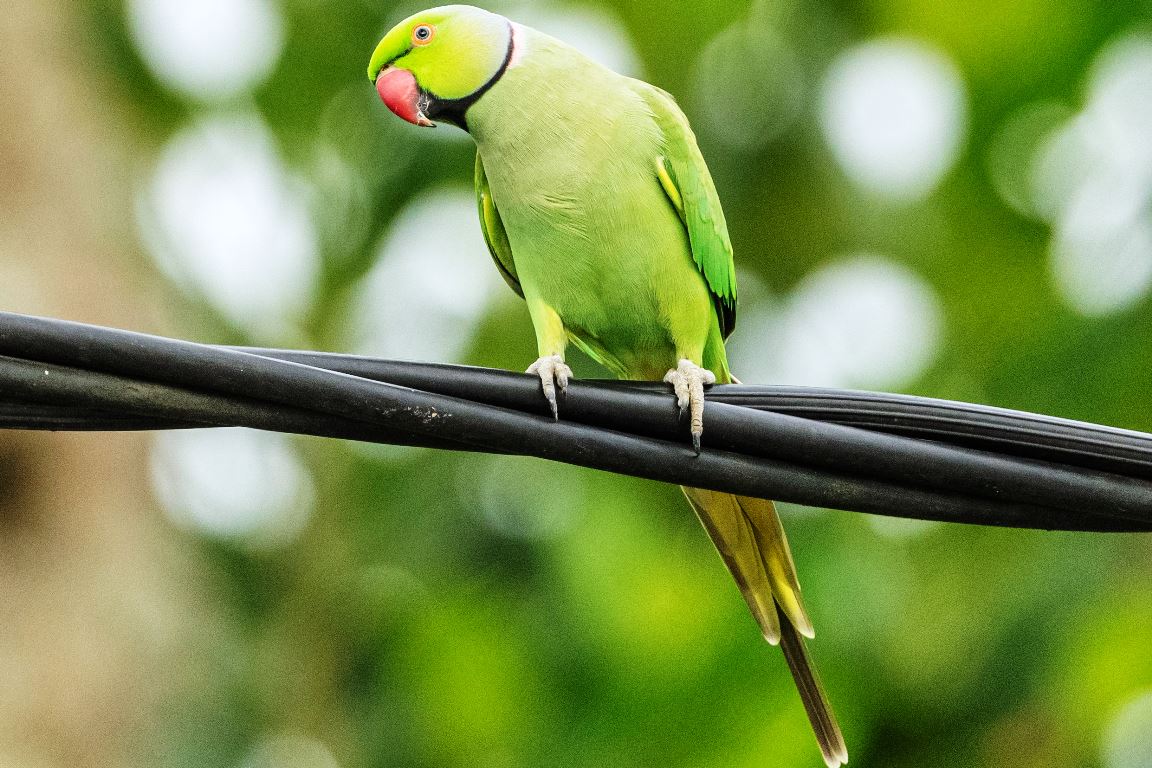
This blog introduces you to the charming and talkative Alexandrine Parrot. Believed to have been brought to Europe by Alexander the Great, this beautiful bird holds a special place in history. Today, in America it is admired for its physical features and ability to mimic human speech.
Physical Characteristics
The Alexandrine has a lush, emerald green plumage. It boasts a maroon patch on each shoulder. Moreover, only males have a black and pink ring around their necks. Adult birds typically measure between 22 to 24 inches from beak to tail; their tail would be more than half of the length. They have curved red beak with a yellow tip and pale yellow eyes which give them a striking, intelligent gaze.
Personality and Behavior
Alexandrine Parrot is known for its intelligent and affectionate nature. They are wonderful companions and thrive on interaction. They demand sufficient stimulation otherwise they can become bored and may develop destructive behaviors.
These parrots are exceptional mimics. They can learn a wide vocabulary of words and phrases. Regular interaction and training could make an Alexandrine parrot a talkative member of the house. Alexandrines form strong bonds with their owners. They can be affectionate and enjoy shoulder rides.
Nutrition
A balanced diet is crucial for health and longevity. The diet of Alexandrine Parrot should include:
- Pellets
- Fresh fruits and vegetables: Apples, grapes, carrots, and berries
- Seeds and nuts
- Fresh water
Housing and Environment
Alexandrine Parrot needs a large cage to remain active and bars for climbing activities. They also need out-of-cage time; few hours daily would keep them healthy and active. They love toys that encourage chewing and foraging. Moreover, natural sunlight and moderate temperature are preferable for their health.
Lifespan
Alexandrine Parrot can live for 25 to 30 years but it needs proper care. Key health concerns include:
- Psittacosis (parrot fever)
- Feather plucking due to stress or boredom
- Nutritional deficiencies
- Beak and feather disease
Is the Alexandrine Parrot Right for You?
While incredibly rewarding, owning an Alexandrine Parrot is a long-term commitment. They require:
- Daily interaction and attention
- A spacious, enriched environment
- Training and socialization
- Financial resources for food, toys, and vet care
- Patience and understanding
The Alexandrine Parrot is more than just a beautiful bird. It is a creature of history, intelligence, and charm.